
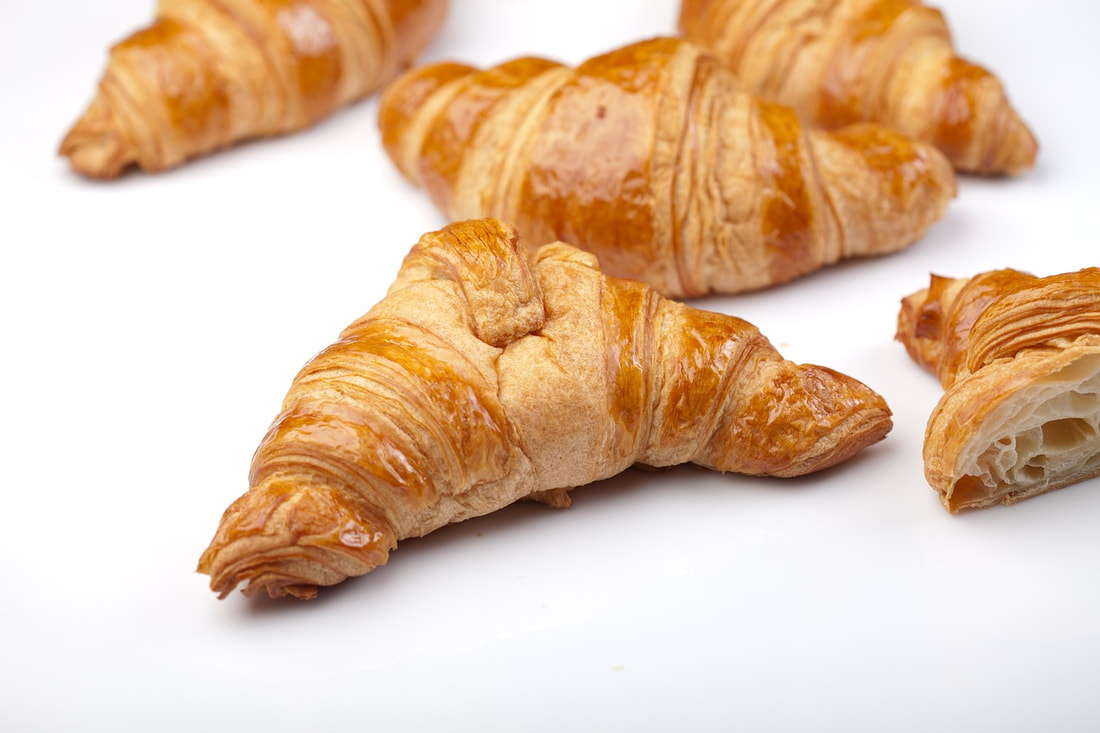
 Quand il s'agit de pâtisserie française emblématique, le croissant est sans conteste l'un des favoris du monde entier. Cependant, une question se pose souvent : quelle est exactement la différence entre un croissant ordinaire et un croissant au beurre ?
1. Les Ingrédients : Commençons par les ingrédients. Le croissant ordinaire est souvent fabriqué avec de la farine, de l'eau, du sucre, du sel, de la levure et de la margarine. La margarine est l'ingrédient clé qui donne à ces croissants leur texture légère et feuilletée. D'un autre côté, le croissant au beurre est, comme son nom l'indique, enrichi en beurre. La pâte est composée de farine, d'eau, de sucre, de sel, de levure et, bien sûr, d'une quantité généreuse de beurre. C'est cette abondance de beurre qui confère au croissant au beurre sa saveur riche et sa texture incroyablement fondante. 2. La Texture : La texture est une caractéristique distincte qui différencie ces deux croissants. Le croissant ordinaire a tendance à être plus léger et moins riche en raison de l'utilisation de la margarine. Il est souvent plus aéré avec des couches bien définies, mais moins fondant en bouche. D'un autre côté, le croissant au beurre est beaucoup plus riche et plus dense. La quantité généreuse de beurre dans la pâte lui confère une texture plus moelleuse et une saveur plus prononcée. Chaque bouchée est une expérience luxueuse de beurre fondant qui se mêle à la légèreté de la pâte feuilletée. 3. La Saveur : En ce qui concerne la saveur, le croissant ordinaire a un goût plus neutre. La margarine apporte une légère touche de gras mais ne contribue pas vraiment à la richesse du goût. Il est souvent utilisé comme base pour des garnitures sucrées ou salées. D'un autre côté, le croissant au beurre est une explosion de saveur de beurre. Le beurre de haute qualité utilisé dans la pâte donne à ces croissants une saveur riche et décadente qui peut être appréciée seule ou avec une simple couche de confiture. Conclusion : En conclusion, la principale différence entre un croissant ordinaire et un croissant au beurre réside dans les ingrédients utilisés et leur impact sur la texture et la saveur. Tandis que le croissant ordinaire est léger et aéré, le croissant au beurre est riche et fondant, offrant une expérience gustative inégalée. Que vous optiez pour la simplicité du croissant ordinaire ou le luxe du croissant au beurre, une chose est sûre : chaque bouchée vous transportera en France, le pays où le croissant est roi. English: When it comes to iconic French pastries, the croissant undoubtedly ranks among the world's favorites. However, a question often arises: what exactly is the difference between an ordinary croissant and a butter croissant? In this article, we'll explore these two variations of this golden delight and examine their distinct differences. 1. Ingredients: Let's start with the ingredients. The ordinary croissant is often made with flour, water, sugar, salt, yeast, and margarine. Margarine is the key ingredient that gives these croissants their light and flaky texture. On the other hand, the butter croissant is, as the name suggests, enriched with butter. The dough is composed of flour, water, sugar, salt, yeast, and, of course, a generous amount of butter. It's this abundance of butter that gives the butter croissant its rich flavor and incredibly melt-in-your-mouth texture. 2. Texture: Texture is a distinct characteristic that sets these two croissants apart. The ordinary croissant tends to be lighter and less rich due to the use of margarine. It's often more airy with well-defined layers but less buttery in texture. On the flip side, the butter croissant is much richer and denser. The generous amount of butter in the dough gives it a more buttery and melt-in-your-mouth texture. Each bite is a luxurious experience of melting butter that blends with the flakiness of the pastry. 3. Flavor: When it comes to flavor, the ordinary croissant has a more neutral taste. Margarine adds a slight hint of fat but doesn't contribute much to the richness of the flavor. It's often used as a base for sweet or savory fillings. On the other hand, the butter croissant is a burst of buttery flavor. The high-quality butter used in the dough gives these croissants a rich and decadent flavor that can be enjoyed on its own or with a simple layer of jam. Conclusion: In conclusion, the main difference between an ordinary croissant and a butter croissant lies in the ingredients used and their impact on texture and flavor. While the ordinary croissant is light and airy, the butter croissant is rich and buttery, offering an unparalleled taste experience. Whether you opt for the simplicity of the ordinary croissant or the luxury of the butter croissant, one thing is certain: each bite will transport you to France, the country where the croissant reigns supreme.
0 Comments
I am offering you a weekly conversation group for teenage French learners (aged 12 to 16 years old)
👥 Who? Teens aged 12-16 📅 When? on Tuesdays 7:00-7:30pm EST 🌐 Where? Online (Zoom)
https://www.frenchbyemilie.com/store/p22/FrenchconversationgroupforTeens.html Topic on February 20th : le bien-être (well-being)
RETOURNER
To go back to a place where the speaker has been before but is not currently located. Example:
To come back to the place where the speaker currently is. Example:
Meaning: “to return home” (your house, your country...) Example:
Valentine’s Day in France = Just for People in Love
En France, la Saint-Valentin est uniquement fêtée par les amoureux. En France, les enfants n'offrent pas de carte de Saint-Valentin à tous leurs amis et à leur famille ou seulement s'ils ont un intérêt "amoureux" particulier. N'allez donc pas envoyer à tous vos amis français une carte de Saint-Valentin sympathique ! Même si cette fête est considérée de plus en plus comme une fête commerciale, beaucoup de couples en profitent pour célébrer leur amour. La Saint-Valentin en France est célébrée un peu comme dans le reste du monde - chocolats, roses, bijoux, restaurant romantique... Parfois une carte, mais beaucoup moins que dans les cultures anglaises et, encore une fois, uniquement pour des intérêts romantiques. In France, Valentine's Day is only celebrated by people in love. In France, kids do not give a Valentine to all their friends and family or only if they have a special “love” interest . So don’t go about sending all your French friends a friendly Valentine’s day card ! Even if this holiday is considered more and more as a commercial holiday, many couples take the opportunity to celebrate their love. Valentine’s day in France is celebrated a bit like it is in the rest of the world – chocolates, roses, jewels, a romantic restaurant... Sometimes a card, but much less than in English cultures and again, only for romantic interests. Are you curious to learn more about Marie Antoinette, the fascinating historical figure? If so, mark your calendars for Thursday, February 22nd, at 7:00 PM EST , and join our French book club meeting on Zoom!
Marie Antoinette, the last queen of France before the French Revolution, continues to intrigue and inspire people around the world. From her lavish lifestyle to her tumultuous reign, there's much to explore and discuss. Our book club will be focusing on a book that offers insights into her life in an accessible way, making it suitable even for beginners. Whether you're a history enthusiast or simply curious about this iconic figure, this meeting promises to be engaging and enlightening. Here is the book that we will study : Marie-Antoinette au château de Versailles, Mondes en VF The book is at an A1 level. It is ideal for learners who understand simple sentences (basic vocabulary, mainly using present and passé composé). https://www.amazon.com/Mondes-VF-A1-Marie-Antoinette/dp/227810246X/ref=sr_1_1?crid=27QZMXVZJIJBK&keywords=marie+antoinette+mondes+en+vf&qid=1706224504&sprefix=marie+antoinette+mondes+en+vf%2Caps%2C102&sr=8-1 After your registration, I will send you:
Participation fee: $10 per meeting https://www.frenchbyemilie.com/store/p21/Book_Club.html Are you planning a trip to France this summer and want to learn some basic French to greet people, be polite, order at restaurants, and ask for directions? Look no further! I'm excited to introduce specialized lessons tailored specifically for tourists like you.
Traveling to a new country can be both thrilling and challenging, especially when there's a language barrier. That's why I've designed these focused lessons to help you navigate common situations you'll encounter during your travels in France. Here's what you'll learn:
Don't let language barriers hold you back from fully immersing yourself in the rich culture and experiences that France has to offer. With personalized lessons focused on tourism, you'll be well-equipped to explore, connect, and make unforgettable memories during your trip. Contact me today to schedule your customized French lessons and embark on your journey to becoming a confident traveler in France! French group for intermediate and advanced level. (on Zoom)
Improve reading comprehension, listening comprehension, pronunciation and practicing discussion with a news document. Each week, the subject is different. This week, we are going to study an article about "Nicolas de Staël". Before the meeting you will receive: - a video - a transcript - questions During the meeting: - We will read the document together and explain the vocabulary - We will answer the questions together - We will have a conservation about the topic. I will send you the document and the Zoom password by email when you are registered. Please contact me by email ([email protected]) to give me your email address in order to receive the document and the Zoom password. Price: $10 / person (Paypal, Venmo or on my website) I'm looking forward to meeting you! Instagram: @frenchbyemilie https://www.instagram.com/frenchbyemilie/ Facebook: https://www.facebook.com/frenchbyemilie Are you looking for an original Christmas present?
This Christmas, offer someone the opportunity to learn French with a private French lesson!!! A thoughtful and unique gift for anyone who might be thinking about doing something new in 2023!!! The lessons are online with Zoom. It is an online meeting room, you can access it thanks to a link I send you by email. If you live close to Satellite Beach, the lessons could be in-person at the library. - Discover a new language - Improve the skills - Prepare a trip in Canada or France Contact: [email protected] (possible custom amount)
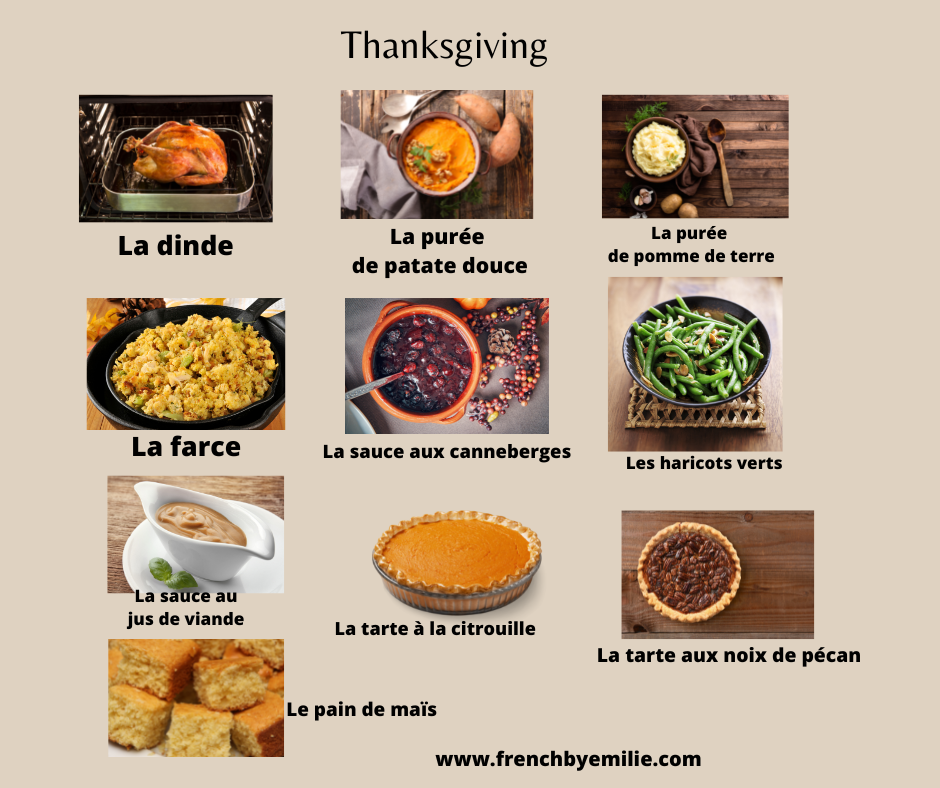
Joyeux Noël!!!  En France, nous ne fêtons pas Thanksgiving. En français, cela se traduirait par l'action de grâce.
Le week-end, je fais le ménage. (faire le ménage = to do the housework)
Je passe le balai. Je passe l'aspirateur. Je lave le sol. Je fais les poussières. Je nettoie la cuisine et la salle de bain. French group for intermediate and advanced level. (on Zoom)
Improve reading comprehension, listening comprehension, pronunciation and practicing discussion with a news document. Each week, the subject is different. This week, we are going to study an article about "La mode et l'écologie, des frère et soeur ennemis?" Before the meeting you will receive: - a video - a transcript - questions During the meeting: - We will read the document together and explain the vocabulary - We will answer the questions together - We will have a conservation about the topic. I will send you the document and the Zoom password by email when you are registered. Please contact me by email ([email protected]) to give me your email address in order to receive the document and the Zoom password. Price: $10 / person (Paypal, Venmo or on my website) I'm looking forward to meeting you! Instagram: @frenchbyemilie https://www.instagram.com/frenchbyemilie/ Facebook: https://www.facebook.com/frenchbyemilie How to say in French that there is a lot of traffic or that there is a traffic jam?
Il y a un embouteillage. Il y a un bouchon. Il y a de la circulation. Où et quand l’embouteillage le plus long de l’histoire a-t-il eu lieu ? En 2010, un embouteillage monstre s'étalant sur 100 kilomètres, a duré pendant 12 jours ! C'était en Chine! Du 10 au 16 octobre, c'est la semaine du goût en France! Cet évènement a lieu dans les écoles afin de faire découvrir de nouvelles saveurs aux enfants. Aujourd'hui, je vous propose de parler des saveurs des aliments. 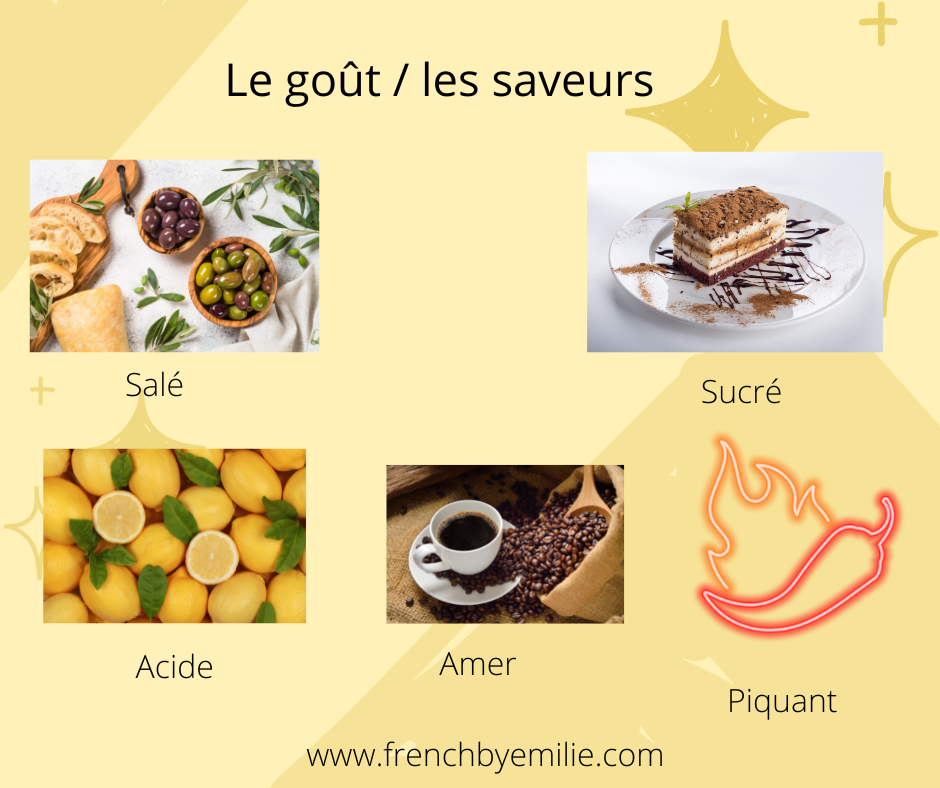 L'olive est salée.
Les olives sont salées. Le gateau est sucré. Les gateaux sont sucrés. Le citron est acide. Les citrons sont acides. Le café est amer. La bière est amère. Le piment est piquant. / La moutarde est piquante. Les piments sont piquants. Les moutardes sont piquantes. Pour demander, vous pouvez poser les questions :
 Octobre rose est une campagne annuelle de communication destinée à sensibiliser les femmes au dépistage du cancer du sein et à récolter des fonds pour la recherche. Le symbole de cet évènement est le ruban rose. Son équivalent anglo-saxon est le National Breast Cancer Awareness Month.
Le dépistage du cancer du sein se fait via une mammographie de dépistage, autrement dit une radiographie des seins. Cet examen permet de déceler des tumeurs de très petite taille, bien avant que celles-ci ne soient palpables ou ne se manifestent par d’autres symptômes. Quelle maison de mode a le plus fait sensation cette semaine?
Une robe a fait sensation lors de la semaine de la mode à Paris. La maison de mode Coperni a crée la surprise avec une robe en peinture qui s’est transformée en tissu. La transformation a eu lieu devant le public. Cette peinture est en fait une solution qui contient des fibres de coton et des fibres synthétiques. Au contact de la peau, cette solution se transforme alors en tissu. La mannequin américaine Bella Hadid a ensuite defilé avec cette jolie robe blanche. 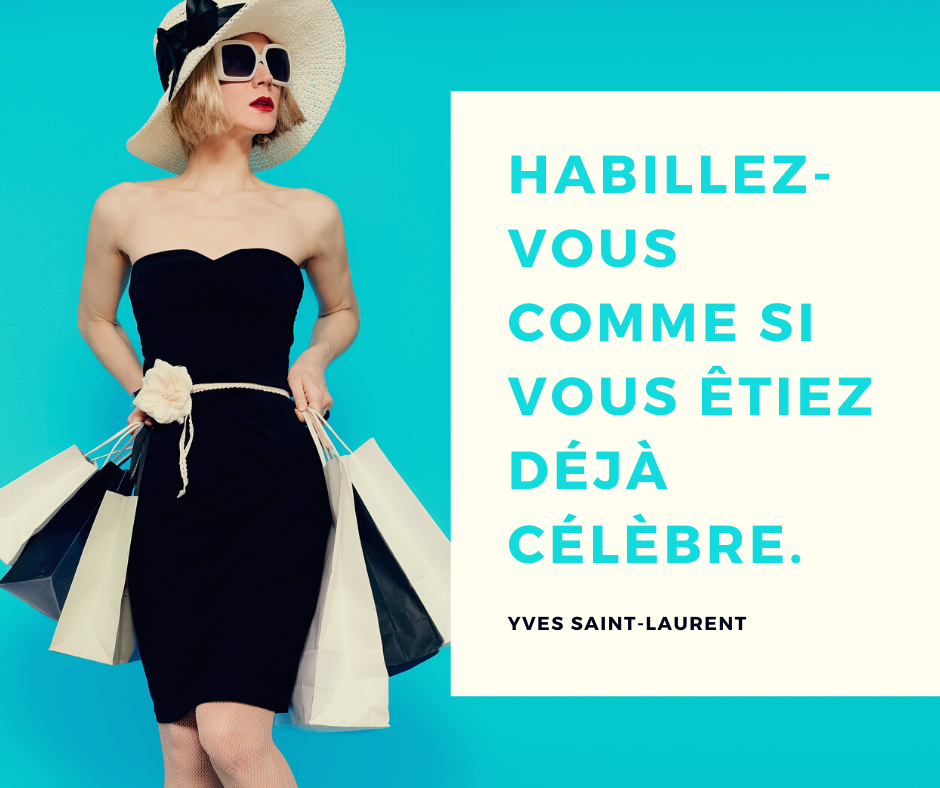 La Haute Couture :
La haute couture est caractérisée par les vêtements de luxe. En France, la haute couture est une appellation protégée par la loi. C’est la Chambre syndicale de Haute Couture qui décide si les maisons remplissent les critères pour obtenir l’appellation Haute Couture. La Chambre Syndicale de Haute Couture exige un nombre de critères pour qu’une maison de haute couture puisse porter ce titre, notamment : - Les vêtements doivent être conçus dans les ateliers de la maison. - Les vêtements sont fait sur mesure. - Dans ces ateliers, il doit y travailler au moins 12 personnes. - Les collections doivent être présentées sur un podium, deux fois par an, avec au moins 50 nouveaux modèles. - Les vêtements doivent être présentés par au moins 3 mannequins. - Il doit y avoir un showroom, un endroit où les vêtements peuvent être montrés aux clients fidèles. En 2022, seules seize maisons bénéficient du statut de membre (dont certaines ne défilent actuellement plus) : Adeline André, Alexandre Vauthier, Alexis Mabille, Bouchra Jarrar, Chanel, Christian Dior, Franck Sorbier, Giambattista Valli, Givenchy, Jean Paul Gaultier, Julien Fournié, Maison Margiela, Maurizio Galante, Rabih Kayrouz, Schiaparelli, Stéphane Rolland. La prochaine semaine de la mode haute-couture aura lieu du 23 au 26 janvier 2023. Le prêt-à-porter : Le prêt-à-porter n’est pas fait sur mesure. Les pièces vendues sont des produits finis, avec des tailles standardisées, ce qui permet une production en série et un prix plus abordable. Follow us: https://frenchbyemilie.com https://www.facebook.com/frenchbyemilie/ https://www.instagram.com/frenchbyemilie/ La semaine de la mode de Paris est une célèbre semaine de défilés de mode de haute couture et de prêt-à-porter.
Du lundi 26 septembre au mardi 4 octobre, on peut découvrir les collections féminines de prêt-à-porter pour la saison printemps-été 2023. Où se déroulent les défilés de mode ? Ils se déroulent à Paris dans les quartiers du Marais, de la Concorde, du Palais-Royal, du Trocadéro ou de Saint-Germain-des-Prés. Qui organise cet évènement ? C’est la Fédération de la haute couture et de la mode la chapeaute qui organise cet évènement. Les dates des futurs défilés sont sur son site internet : https://parisfashionweek.fhcm.paris/fr/mode-feminine-printemps-ete-2023/ Qui est invité à cet évènement ? Les personnes invitées à la semaine de la mode à Paris sont les acheteurs des grands magasins internationaux, des boutiques multimarques prestigieuses ou des sites de luxe. Aux premiers rangs des défilés, on retrouve souvent les meilleurs clients, des célébrités, des influenceurs et des journalistes mode. Every day, the calendar on the kitchen wall of many French people, suggests celebrating a saint, and all the people who have that same first name at the same time. It’s your name day!
Your name day is almost like your birthday. People greet you with “Bonne fête!” and they give you a small gift or flowers. Not all French families celebrate this day. It depends on the family tradition. My name Day in on September 19th! La Saint Emilie est le 19 septembre. Usually my closest family sends me a message to say "Bonne fête" and my sisters give me a little gift! I live in the United States and I don't think Americans celebrate name day. If you live in another country, do you celebrate Name Day? Aujourd'hui, nous sommes le 22 septembre et c'est le premier jour de l'automne! J'aime beaucoup cette saison car les feuilles changent de couleur. Savez-vous pourquoi les feuilles des arbres changent de couleur? La chlorophylle, qui donne la couleur verte à la feuille, disparaît quand il y a moins de soleil et que les températures baissent. Cependant, les autres pigments présents dans les feuilles sont toujours là (xanthophylles (jaune) et carotènes (orange)). Avec la disparition de la chlorophylle, ils deviennent apparents. Chanson d’automne
Les sanglots longs Des violons De l’automne Blessent mon coeur D’une langueur Monotone. Tout suffocant Et blême, quand Sonne l’heure Je me souviens Des jours anciens Et je pleure. Et je m’en vais Au vent mauvais Qui m’emporte Deçà, delà, Pareil à la Feuille morte. Paul VERLAINE (1844-1896) 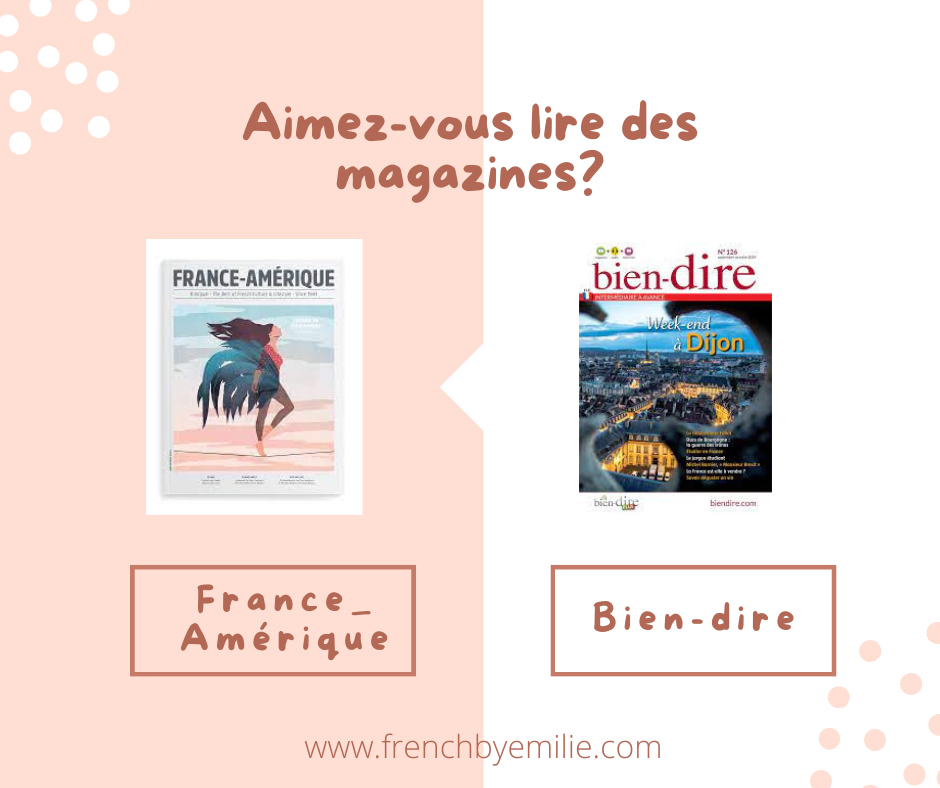 I can recommend two magazines in French.
https://biendire.com/en/content/177-home 2 levels = beginner to intermediate / intermediate to advanced Articles written in French with keys to understanding and learning at your own pace, with complete autonomy. You can choose the subscription in paper or digital version. There are also many free articles on the website (about news, history, gastronomy, ...) https://france-amerique.com/ It's a monthly magazine. The magazine is bilingual French-English. The articles are about cultural and economic affairs, cinema, gastronomy and French language. You can choose a monthly subscription or or buy the magazines individually on the website. Et vous, est-ce que vous lisez des magazines? Si oui, quelles sortes de magazines lisez-vous? Mon magazine préféré est le magazine "Géo" parce qu'il me fait voyager! https://www.geo.fr/ Follow us: https://www.facebook.com/frenchbyemilie/ https://www.instagram.com/frenchbyemilie/ |

 RSS Feed